

As I have often written on this blog, reliance on undependable informants can lead to embarrassment and potentially to disaster, which the journalist Gay Talese has now learned to his regret. Talese spent over forty years, on and off, researching his book The Voyeur’s Motel, in which he told the story of an Aurora, Colorado, motel owner named Gerald Foos, who claimed to have spied on the sexual activities of his guests at a property called The Manor House. Talese visited Foos and interviewed him extensively, and even joined him watching an unsuspecting couple in bed. Much of the book was based on Foos’s notebooks, which he claimed to have kept from 1966 to the mid-1990s. Talese’s book was already printed and ready for distribution when it was discovered that Foos had been lying all along.
It turned out that Foos had sold the motel in 1980 and had not owned it for the next eight years (he re-purchased it in 1988). Some of the key events described in The Voyeur’s Motel purportedly occurred during this interregnum – in other words, they were falsified – which could have been discovered if Talese had simply fact-checked the county property register. Instead, he learned about it only when confronted by a reporter.
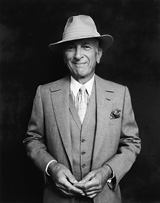
The author was forced to disavow his own book on the brink of publication (the official date is July 12), telling The Washington Post that he could not stand behind it. “How dare I promote it when its credibility is down the toilet?” he said. “The source of my book, Gerald Foos, is certifiably unreliable.” “He’s a dishonorable man, totally dishonorable.” (Talese subsequently disavowed his disavowal, probably in light of his contractual obligations to his publisher, Grove Atlantic. He promised to make any needed corrections in the next edition.)
In any case, Talese ignored red flags along the way, naively accepting explanations – and even inventing excuses – that he never should have believed. For example, Foos recounted in his journal that he witnessed the strangulation murder of a young woman at the Manor House on November 11, 1977, claiming that he had anonymously reported the murder to the police. Talese actually investigated this claim, but he could find no record of a murder on that date. There was nothing in police files, no coroner’s report, no death certificate, and nothing in the local newspapers. Rather than disbelieve his informant, however, Talese attributed the missing records to “bureaucratic error.” It was “not impossible,” he wrote, “for there to be no remaining police records,” because “two former officers” told him they might have disappeared over time. If Talese had investigated further, however, he would have discovered that a young woman named Irene Cruz had been strangled at a different Denver motel, only ten miles from The Manor House, on November 3, 1977 – only eight days before Foos’s journal entry. The Cruz murder was covered in the Denver press, and the police record of her death is still easily obtainable, raising the obvious suggestion that Foos had simply appropriated the story for his journal.
Talese’s credulity – a willing suspension of disbelief for the sake of a good story – was his undoing. Where he should have been skeptical of his informant, he was far too trusting, or perhaps even enabling. As I have said before in this space, law, journalism, and social science must all demand a standard of proof greater than “not impossible.”
Sources: Paul Fahri, “Author Gay Talese Disavows His Latest Book amid Credibility Questions,” Washington Post, June 30, 2016; Paul Fahri, “The Murder the New Yorker Never Mentioned,” Washington Post, April 13, 2016; Alexandra Alter, “Gay Talese Defends ‘The Voyeur’s Motel,” New York Times, July 1, 2016.
In the New Yorker article that provided a teaser for the book, Gay Talese describes how he joined in Foos' voyeurism, invading the privacy of an unsuspecting couple so that he could watch them have sex and then engage in "journalism" by writing about his and Foos' exploits. Everything about the article, from Talese's decision to write it to the New Yorker's decision to publish it, is nauseating. The appropriate response is "Ich kann nicht soviel fressen als ich kotzen moechte."
Journalistic ethics have already been obliterated, so who cares if he didn't adequately fact check?