

 I see that Susanne Buckley-Zistel of the Center for Conflict Studies and Stefanie Schaefer, a research fellow at the Irmgard Coninx Foundation, have the introduction to their book Memorials in Times of Transition up on ssrn. Cribbing now from their abstract:
Since the 1960-70s, we can see a worldwide upsurge of memorial projects that address the violent histories of recent wars, genocides and systematic human rights abuses. Such interventions often employ a common architectural language and are informed by a set of political and ethical claims in regard to what role commemoration can and/or should play aft er large-scale violence: providing public sites of mourning, putting past wrongs right, holding perpetrators accountable, vindicating the dignity of victims-survivors and contributing to reconciliation.
Dealing with the legacy of the past is subject to transitional justice. Conventionally, it incorporates a number of mechanisms such as truth commissions, tribunals, lustrations, reparations and more recently also memory work – including memorials – in order to deal with past injustices. It is based on the assumption that any form of transition from violence to peaceful coexistence requires the disclosure of past events and the establishment of some form of justice for the victims in particular and the society in general.
Despite this general reliance on memorialisation within transitional justice, practitioners as well as scholars often share a rather skeptical outlook on the allegedly beneficial impact of such interventions: ranging from fears that an open display of contested memories reignites dormant animosities to the defeatist beliefs that symbolic politics of far-away state institutions make little difference in war-torn communities. Overall, a comprehensive answer to this complex problem is amiss and will remain so unless analysis aims at a more nuanced understanding of the complex ways in which memorials are employed by and function within transitional society. With this volume, we seek to make a contribution towards closing this research gap.
Though the memorials put up in the wake of Civil War are earlier than their project, the issues they discuss have obvious parallels. I've thought for a long time that the excellent work that's been done on transitional justice could be enriched by looking at the south in the wake of Civil War. There were shattered lives struggling to be put back together — the formerly enslaved people who had little resources and whose government often abandoned them, as well as members of the formerly ruling class whose wealth had been largely lost, who were struggling to regain political power. The efforts at addressing past injustices was missing — it was, to turn Eric Posner and Adrian Vermeule's phrase on its side, "transitional justice as ordinary injustice." And running alongside all of this were efforts at memorialization by white southern women. I've spoken before about my skepticism of the importance of public monuments to those who defended the slave-owning south. But I do have to say that I think this is an area of work that deserves more attention from legal scholars than it's received. Soon I hope to turn to this, but first I need to finish my paper on Richmond's Washington Equine Statue and its relationship to slavery and the charitable corporation.
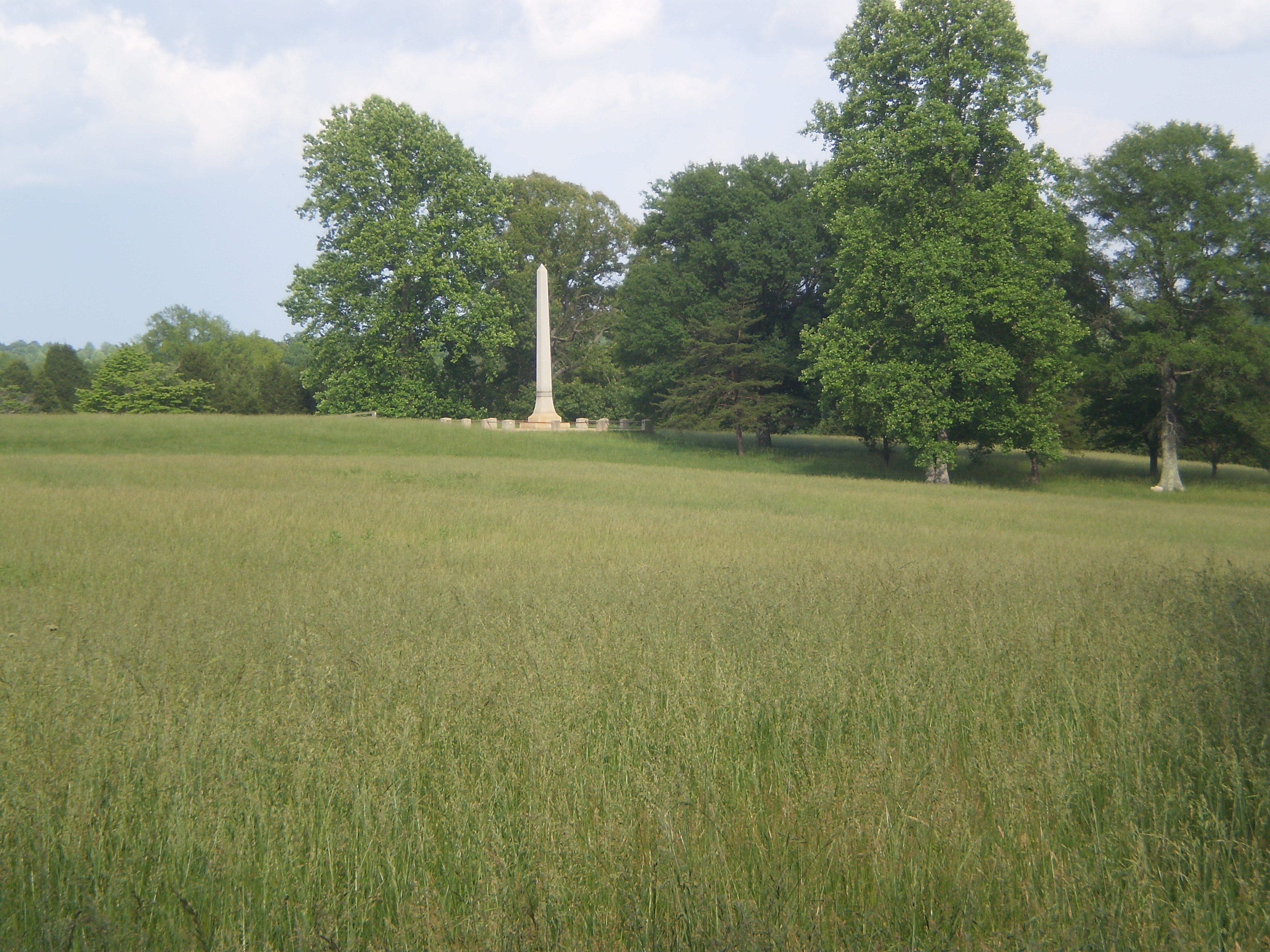
The illustration is a family cemetery at Appomattox.