

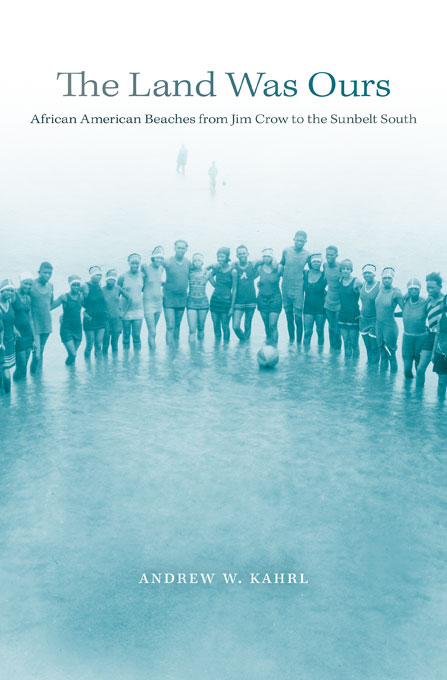
 Andrew W. Kahrl's The Land Was Ours: African American Beaches from Jim Crow to the Sunbelt South (Harvard University Press, 2012) has just arrived in my mail box. This is a really terrific study of segregated beaches in the South during Jim Crow and the transition to integration and the related loss of African American land along those beaches. It's a beautifully written and haunting story. I highly recommend this book to property and land use professors. I hope it gets a lot of attention in law schools as well as history departments.
Cribbing now from HUP's website:
Driving along the coasts of the American South, we see miles of luxury condominiums, timeshare resorts, and gated communities. Yet, a century ago, a surprising amount of beachfront property in the Chesapeake, along the Carolina shore, and around the Gulf of Mexico was owned and populated by African Americans. In a pathbreaking combination of social and environmental history, Andrew W. Kahrl shows how the rise and fall of Jim Crow and the growing prosperity of the Sunbelt have transformed both communities and ecosystems along the southern seaboard.
Kahrl traces the history of these dynamic coastlines in all their incarnations, from unimproved marshlands to segregated beaches, from exclusive resorts for the black elite to campgrounds for religious revival. His careful reconstruction of African American life, labor, and leisure in small oceanside communities reveals the variety of ways African Americans pursued freedom and mobility through the land under their feet.
The Land Was Ours makes unexpected connections between two seemingly diverse topics: African Americans’ struggles for economic empowerment and the ecology of coastal lands. Kahrl’s innovative approach allows him fresh insights into the rise of African American consumers and the widespread campaigns to dispossess blacks of their property. His skillful portrayal of African American landowners and real-estate developers rescues the stories of these architects of the southern landscape from historical neglect. Ultimately, Kahrl offers readers a thoughtful, judicious appraisal of the ambiguous legacy of racial progress in the Sunbelt.